Maintenance departments balance equipment failures, inspection findings, production demands, safety obligations, and finite labor hours. Paper forms, informal requests, and disconnected spreadsheets obscure that workload.
Work Order Management Systems That Strengthen Maintenance Control
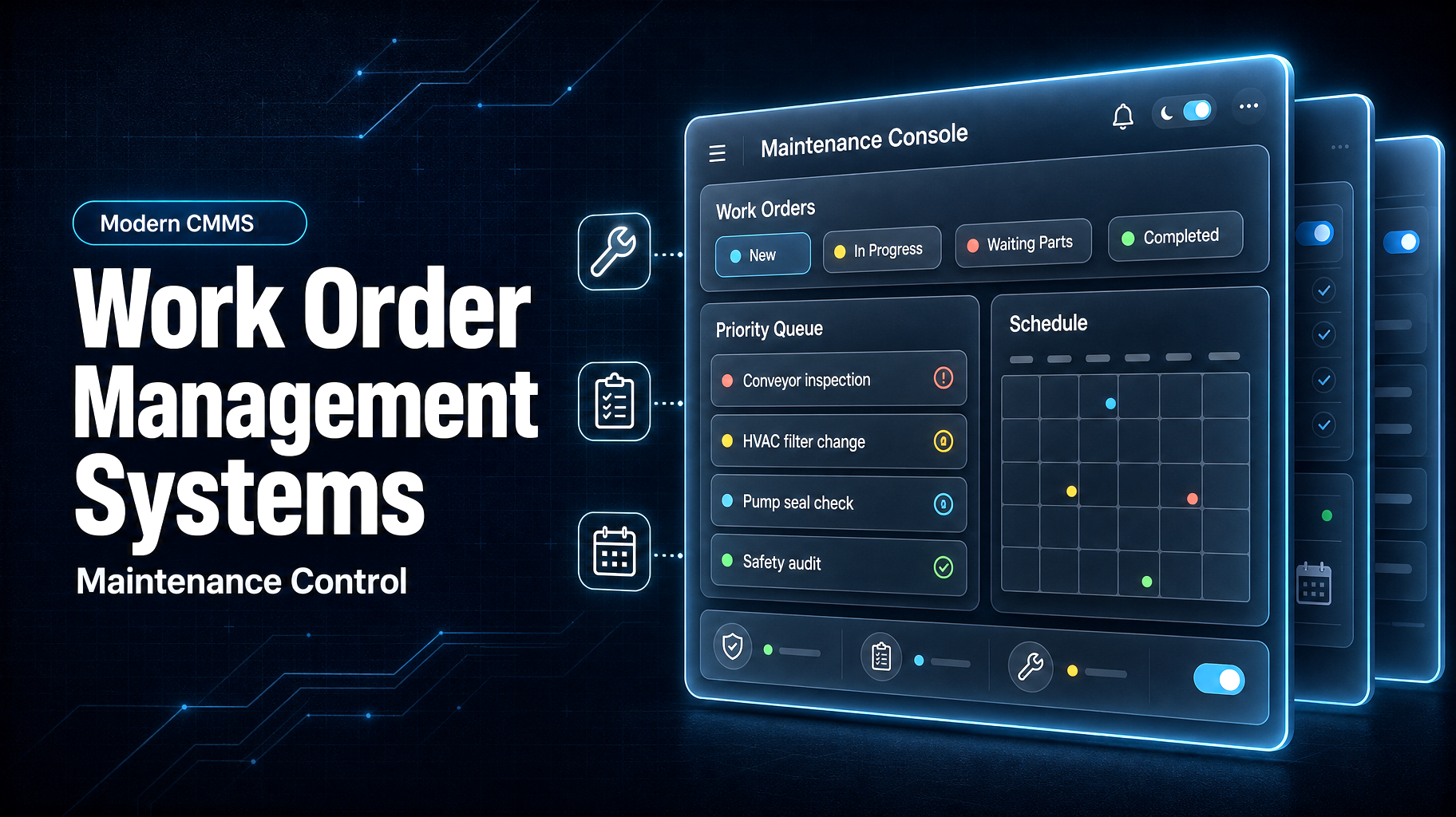
A centralized work order process gives supervisors a reliable view of open tasks, planned activity, overdue jobs, repair history, and downtime. Better visibility supports sound decisions, clearer accountability, and more dependable asset care. It also creates evidence for budget reviews, compliance checks, staffing plans, and long-term reliability programs.
Why Control Starts With Better Work Orders
Maintenance control begins with a consistent route from request submission through final approval. A work order management system can capture asset details, urgency, labor time, parts used, photographs, safety notes, and completion findings in one record. That information allows supervisors to compare scheduled duties with emergency repairs, identify aging requests, and assign technicians according to operational risk. Field personnel receive clearer instructions, while managers gain dependable evidence for staffing and budget choices.
One Intake Process Reduces Confusion
A single intake channel keeps service requests from disappearing inside email chains, verbal conversations, or personal notebooks. Employees can report symptoms with location details, photographs, and urgency ratings. Supervisors then assess each item against injury potential, production loss, environmental exposure, and available resources. Consistent fields create comparable records, which makes later reporting more accurate. The result is a cleaner division between immediate hazards, routine service, and improvement work.
Priority Rules Guide Daily Decisions
Priority categories help leaders direct attention according to consequence rather than noise. A failed interlock or leaking process line may require immediate intervention, while a damaged label can wait for planned labor. Each level should include response targets, approval requirements, and escalation instructions. Useful measures include response time, overdue volume, emergency labor percentage, and repeat incidents. Those figures show whether assignments reflect actual operational risk.
Scheduling Connects People, Assets, and Time
Sound scheduling combines labor availability, equipment condition, production windows, access requirements, and material readiness. Planners can group similar assignments, coordinate contractors, and reserve entry during shutdowns. A visible calendar reduces conflicting bookings and unnecessary movement across large facilities. Technicians also receive preparation time before work begins. Supervisors can compare estimated hours with actual effort and then improve future plans using observed workload patterns.
Mobile Access Improves Field Execution
Technicians need instructions at the asset, not hours later at an office terminal. Mobile access can display procedures, equipment history, isolation steps, checklists, and required materials. Workers can enter readings, comments, photographs, and completion details during the assignment. Offline capability matters in basements, remote areas, and production zones with weak connectivity. Immediate updates reduce duplicate entry while preserving an accurate record of field conditions.
Asset History Supports Better Diagnosis
A complete service history reveals patterns that isolated requests cannot show. Each record should connect the task with an asset, location, failure code, cause, corrective action, and downtime period. Repeated faults may reflect operating conditions, unsuitable components, weak procedures, or age-related deterioration. Reviewing failure frequency, repair expense, and lost production by equipment group supports replacement decisions. It also preserves practical knowledge that might otherwise leave with experienced technicians.
Inventory Data Prevents Repair Delays
Parts shortages can prolong downtime after a fault has already been diagnosed. Connecting stock records with maintenance assignments shows available quantities, reserved items, supplier details, lead times, and reorder points. Critical spares require separate controls based on failure probability and operational consequence. Consumption data can reveal excessive purchasing, inaccurate counts, or recurring shortages. Better material visibility helps technicians begin repairs sooner and supports disciplined purchasing decisions.
Standard Procedures Improve Work Quality
A useful work order guides execution rather than serving as a basic activity log. Checklists can define inspection points, measurement limits, photographs, signoffs, and follow-up actions. Clear instructions reduce variation between technicians, shifts, and locations. Supervisors can also verify that isolation, protective equipment, and testing steps were completed. When a procedure changes, one controlled record makes revisions easier to distribute, review, and audit.
Reporting Turns Records Into Action
Reports should answer operational questions instead of displaying figures without direction. Leaders may examine request age, labor hours by category, preventive completion, parts consumption, and downtime by asset. Trend reviews can expose growing backlogs, repeated breakdowns, or excessive emergency work. Monthly discussions should connect those findings with staffing, training, purchasing, and capital planning. Useful reporting turns routine records into evidence for practical decisions.
Selecting the Right Platform
Evaluation should begin with current workflows, user responsibilities, and measurable objectives. Mobile usability matters for technicians who spend little time at desks. Configurable fields support industry-specific records without adding unnecessary effort. Integrations may connect purchasing, inventory, payroll, or production data. Permission controls, audit trails, reporting depth, and implementation support also deserve careful review. A trial should test real requests, approvals, procedures, and closure steps.
Conclusion
Work order management systems improve maintenance control by connecting requests, personnel, equipment, materials, schedules, and results. Their value depends on consistent use, accurate entries, clear priorities, and regular review. Teams that track response time, preventive completion, backlog age, downtime, and repair expense gain a sound basis for improvement. The right solution should suit field conditions, support planned service, and present essential information in front of personnel before, during, and after each assignment.