A control system is defined to control a process systematically and accurately. In that case, if a control system in industrial automation fails, then the whole process will fail. Many types of issues occur in a control system that need to be addressed properly by an engineer. One such issue is called hunting. Hunting is a very bad problem that occurs in a control system and affects the whole output of the process in a drastic manner. In this post, we will see what hunting is in the control system.
How does hunting occur in a control system?
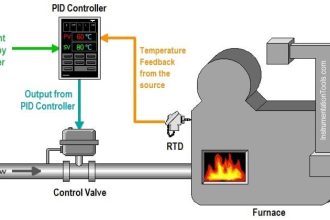
First of all, let us understand what hunting is in a control system. You have a temperature that is to be maintained around 95 degrees Celsius. For that, you have a control steam valve. This control valve needs to be controlled by a PID controller, so that the temperature is maintained by maintaining the proper flow of steam. During that process, it is normal for the temperature to vary 1-2 degrees as tolerance around the set value, or even less.
But what happens if this tolerance varies by 8-9 degrees? And this variation is at a very large time cycle, which means the system is not being controlled. This problem can then be referred to as hunting. It is to be noted that apart from hunting, these variations can also occur due to drift, disturbance, noise, or underdamped response. But what makes hunting different, we will see now.
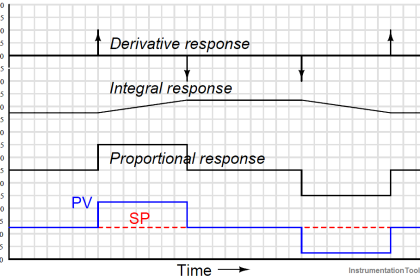
Refer to the image below. Hunting occurs when the process variable is very above or very below the set value for a long time. It is to be noted that hunting can also occur for a short time, which we will understand later. Such continuous oscillation of the controlled variable, without settling down quickly to a steady value, is called hunting. As the variable is controlled by a control element, hunting occurs when the control element is trying to overcorrect the error by alternating between too high and too low.
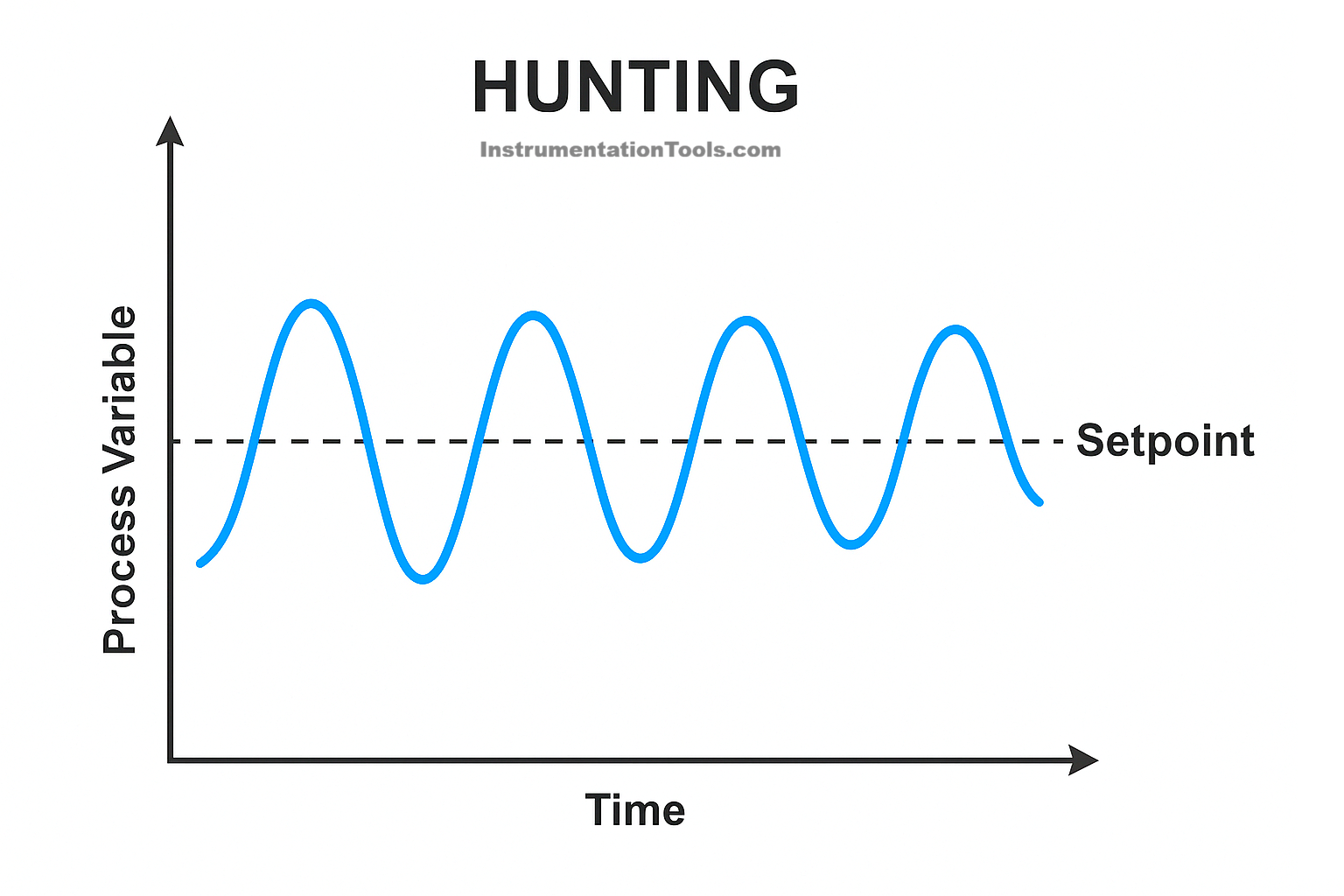
This causes the process variable to swing around the desired value and create a wide oscillation. So, when the control element is trying to rapidly increase the variable or rapidly decrease the variable, then such overshooting and undershooting repeat. This reduces system stability, efficiency, and accuracy, and increases wear and tear of the element, too.
Hunting Reasons
Hunting occurs due to the following reasons:
- In a typical PID application, if the controller gain is too high and the response time is also slow, then such oscillations occur. That means since every correction is late and too strong, the variable overshoots or undershoots, and causes hunting.
- As PID takes input from a sensor for a closed-loop mechanism, if the sensor is lagging in performance, then the feedback received will be late, which will eventually lead to hunting.
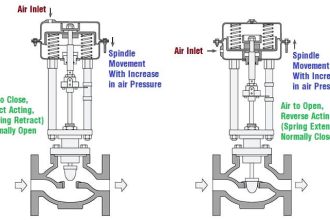
- If there are mechanical or electrical issues related to the control element, which is causing its delay in movement, then it will respond in a lagging manner and cause hunting, as it will not be able to control the variable accordingly.
- PID tuning, when done in a way that controller gain is large and response time is also too fast, then it will respond too quickly to any changes and not allow the variable to settle, which can cause hunting too. This indicates that the tuning has been done in a very aggressive manner.
- If everything is proper, but the control signal given by the sensor is facing electrical disturbances from outside, then a wrong feedback will go to the PID controller and will manipulate the output, thus causing hunting.
It is to be noted that hunting can have large oscillations or small oscillations. In large oscillations, the amplitude of the oscillation remains large for a longer period of time, while in small oscillations, the amplitude of the oscillation remains large for a short period of time (maybe during the start of the cycle for some time and then becomes normal, which is normal and not damageable as compared to large oscillations hunting).
How to Prevent Hunting?
So, hunting can be reduced by the following methods:
- Frequent maintenance tasks of control elements like valves and actuators are a must. Looking for physical, mechanical, electrical, and environmental effects on them is required so that they do not get jammed or cause any malfunction.
- Instead of manually tuning PID, auto-tuning is the best way to get the correct results. This helps to find a balanced P, I, and D parameter and avoids aggressive tuning, which indirectly helps to reduce hunting. So, the control element should thus not act with a high controller gain and should also respond in a correct time, which is neither too fast nor too slow.
- Always check for the use of fast sensors with swift control signal changes, which are immune to outside noise and interference. This improves actuator response by reducing the delay. If the sensor is working correctly and giving the signals on time, then the PID will function properly. If it is still generating noise, then add a low-pass filter, which will help to give proper feedback.
- It is important to consider deadbands when configuring PID. This will reduce hunting because the controller knows that some deviation in the control variable is acceptable within that limit. Due to this, the control element will not try to overcorrect the error, and the system becomes stable.