Analog signals are a great part of instrumentation and electronics engineering. It is due to their variation that the control systems have become more robust and efficient to operate. In terms of analog signals used in automation generally, the three types of signals used are 0 to 20 mA, 4 to 20 mA, and 0 to 10 V DC. Out of this, as we can see, the current signals are 0 to 20 mA and 4 to 20 mA. In analog signals, the two most used concepts are live zero and dead zero. It is very important to understand the two concepts; otherwise, interpreting analogue signals becomes a hurdle for the engineers. In this post, we will see what the dead zero problem is in analog signals.
What is live zero in analog signals?
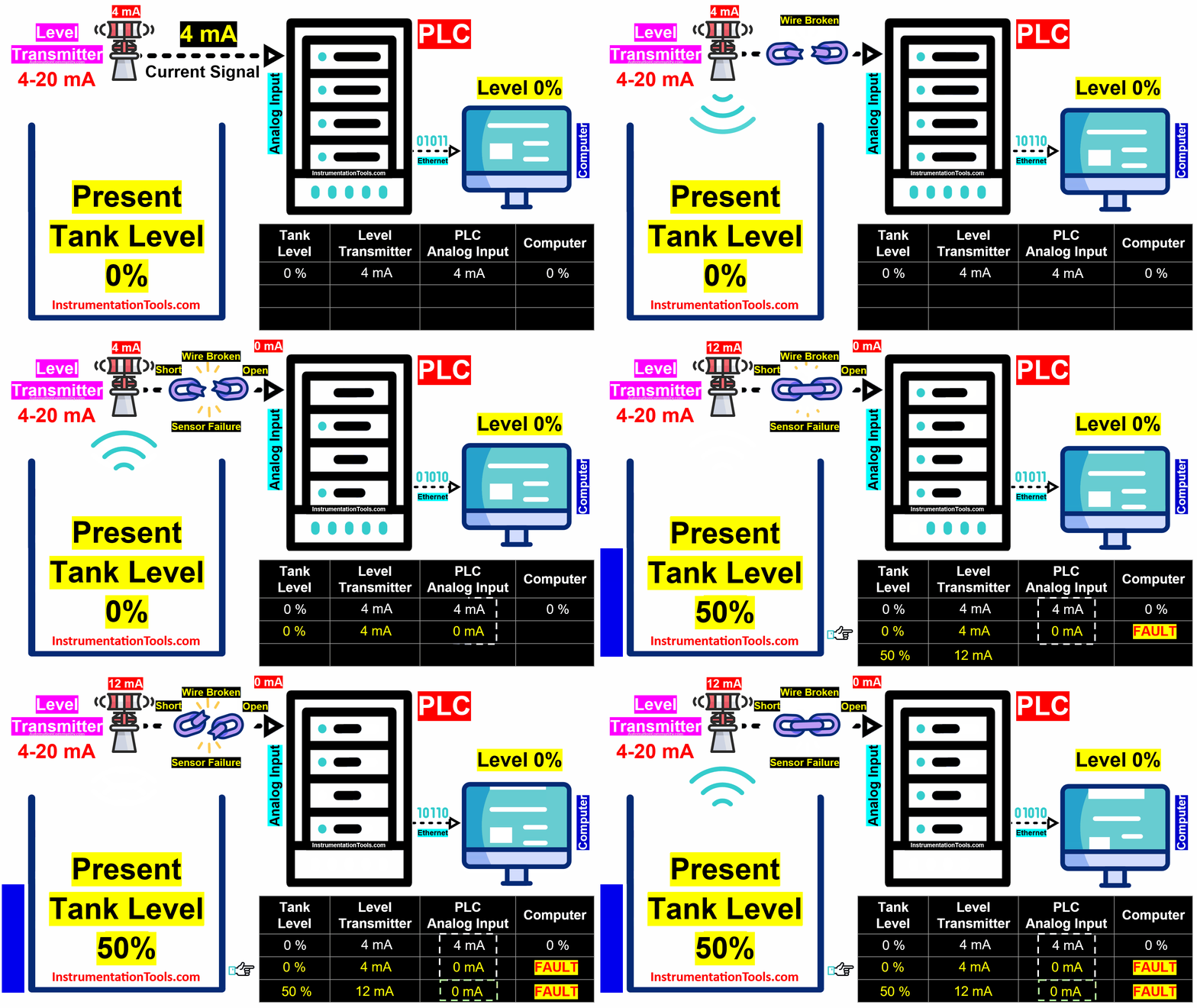
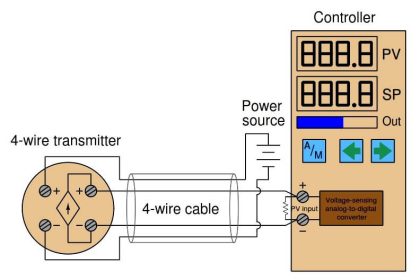
Before understanding the dead zero signal, first let us understand what a live zero signal is. Simply consider our analog signal of 4-20 mA. A 4-20 mA signal can be loop powered or 4-wire. Refer to the image below. A loop-powered instrument is one where power and signal flow in the same 2 wires. This happens because some current is required to power the loop, and a minimum of 4 mA is enough to drive the circuit. This cannot happen in a 0-20 mA signal, because the minimum signal here is 0 mA, and that cannot drive a circuit on its own. So, a separate power supply is required for the instrument to power up the instrument, which makes it mostly a 4-wire sensor.

Now, if the wire of 4-20 mA breaks, then the signal value received will be less than 4 mA. This will make the engineer understand that some wire has broken, or the power supply has failed, or the instrument is powered off. This makes troubleshooting easier for the person to work. Such a signal is called live zero, because when zero input comes or there is no signal, you get a clear distinction of wire break.
What is dead zero in analog signals?
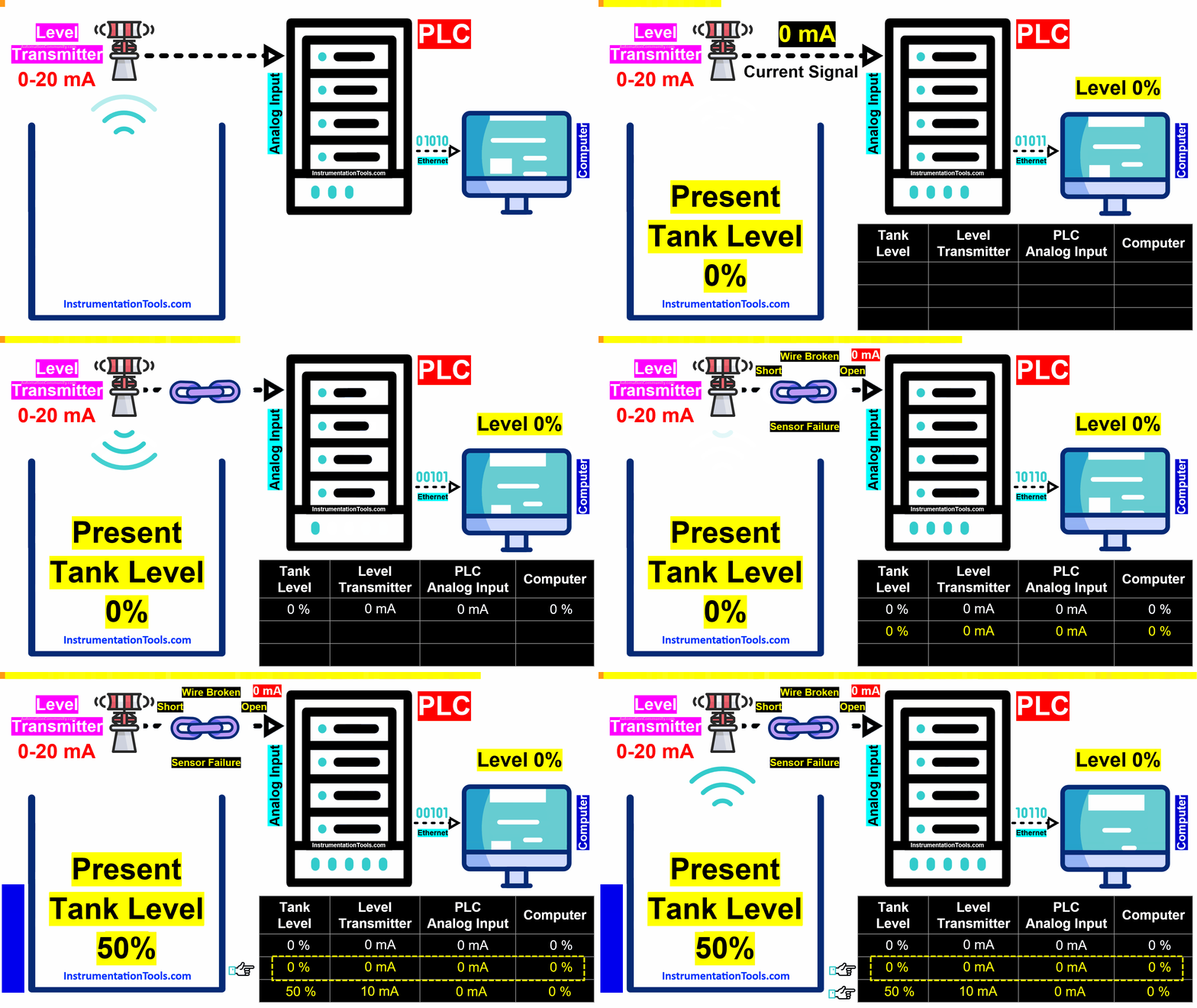
The example we discussed for 0-20 mA is called a dead zero. Now, if the wire of 0-20 mA breaks, then the signal value received will still be 0 mA. This will make it difficult for the engineer to understand that some wire has broken, or the power supply has failed, or the instrument is powered off. This makes troubleshooting harder for the person to work. Such a signal is called dead zero, because when zero input comes or there is no signal, you do not get a clear distinction of wire break, and the result becomes completely dead.
Like a live zero signal, we expect the dead zero signal to give some current less than 0 mA, which is practically not possible. 0 mA can come when the process that the instrument is measuring itself becomes zero, or if the wire breaks, or if there is no power supply. So, you cannot estimate the exact result or the meaning of the mA becoming zero. Therefore, like a 4 to 20 mA sensor where you get some current if it goes below 4 mA, this is not possible in 0 mA. This is one of the major reasons why a 0 to 20 mA sensor is generally not used for the instruments nowadays.
How to verify dead zero analog signals?
While we saw how it is practically not possible to find out the exact reason for the value becoming 0, we can still use some traditional methods afterwards to find out what happened exactly.
Let us see them step by step:
- Check the power supply of the instrument. As the sensor of 0-20 mA is mostly 4-wire (due to no possibility of loop power as discussed earlier), you can first check whether the instrument itself is powered up or not. If not powered, then you will get 0 mA.
- Check for wire breaks. If there is a loose connection or wire breakage, then the signal will not be received, and you will get 0 mA.
- Check the process that the sensor is sending, like flow, for example. If the sensor is used for sensing flow and there is no flow at all, then you will receive 0 mA as a signal.
- Inversely, if there is a flow, but the transmitter is faulty, then you will receive 0 mA at the output.
As we saw, dead zero is a major issue for analogue signals. It will not trouble you as long as it is giving the correct value. But as soon as it gives 0 mA, you will get confused as to why the signal is dead and will not be able to find the exact reason so easily. In that scenario, live zero is much more reliable, as you get a value less than 4 mA in case of a wire break or a signal fault condition. It is due to this dead zero problem that an analogue signal whose minimum value starts at 0 is not preferred much for instrumentation.
Read Next:
- What is a Dead Weight Tester?
- 3-15 psi, 10-15 mA, and 4-20 mA
- Instrument Zero & Span Errors
- Process Instrumentation Glossary
- Live Zero in 4-20 mA Current Loop