In chemical plants, energy systems, and industrial processes, it is important to measure mass flow. Choosing the proper flow meter can have a huge impact on the accuracy, cost of operation, and efficiency of your system, whether you are monitoring slurry concentrations, batching chemicals, or keeping track of gas usage. Two common types of mass flow meters are Coriolis and thermal mass flow meters. Both measure mass flow directly, but they work in quite different ways and are best used in distinct situations. The next few parts make this clearer with easy-to-understand explanations and side-by-side tables.

Thermal Mass Flow Meter versus Coriolis Flow Meter
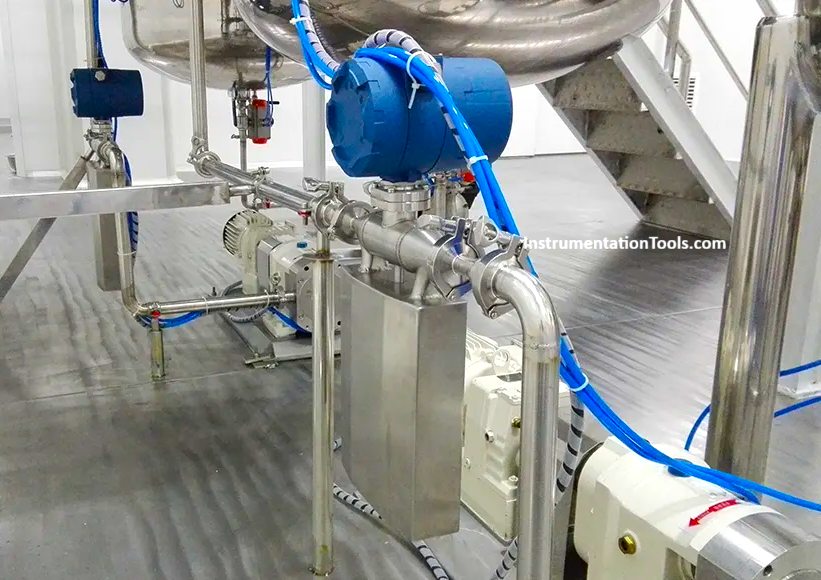
Coriolis meters measure mass flow by measuring how much the tubes twist as fluid flows through them. This twist solely depends on mass flow, hence the measurement stays fairly steady even when the temperature or pressure fluctuates. Thermal mass flow meters work in a different way. They measure how much heat the gas takes away from a heated sensor. This means they work well with clean, dry air or gas, but not with liquids or moist places. You can better comprehend the difference if you think of Coriolis as a “precision scale” and thermal as a “heated airflow sensor.”
Table of Comparison: How It Works
| Item | Coriolis Flow Meter | Thermal Mass Flow Meter |
| Physical principle | Tube twist (Coriolis force) | Heat loss from heated sensor |
| Measurement type | True mass flow | Mass flow of gases |
| Multi-variable | Mass, density, temperature | Mass flow only |
| Fluid phase | Liquid, gas, slurry | Clean, dry gas only |
| Sensitivity | Low sensitivity to fluid changes | High sensitivity to gas composition |
Precision and Functionality
Coriolis meters are particularly accurate because they measure real mass movement instead of depending on secondary effects. Even if the temperature or viscosity changes, their readings stay accurate. Thermal meters are very accurate when the gas composition is steady, and they work best when the flow range is wide, like when gas use vary a lot between peak and idle hours. This makes thermal meters a good choice for utilities and energy monitoring at many plants.
Comparison Table: Accuracy & Performance
| Item | Coriolis | Thermal Mass |
| Mass flow accuracy | ±0.1% – ±0.2% | ±1% – ±2% |
| Repeatability | ±0.05% | ±0.5% |
| Density output | ✔ Yes | ✘ No |
| Turndown ratio | Up to 20:1 | Up to 100:1 or 1000:1 |
| Stability | Unaffected by fluid changes | Affected by gas mixture variation |

Fluid Compatibility
Coriolis meters can handle just about anything—clean liquids, thick viscous fluids, slurries, and even some challenging mixtures—making them one of the most flexible technologies on the market. Thermal mass flow meters, by contrast, specialize in gases. Their sensors must remain clean and dry to stay accurate, so they are not recommended for wet gases or environments with contamination. In short: if your process involves “liquid and tough fluids,” go Coriolis; if it’s “clean gas only,” thermal may be the better match.
Comparison Table: Fluid Compatibility
| Fluid Type | Coriolis | Thermal |
| Liquids | ✔ Excellent | ✘ Not possible |
| Gases | ✔ Accurate | ✔ Best use case |
| Slurries | ✔ Suitable | ✘ Not suitable |
| Wet/dirty gas | Acceptable | Not recommended |
| Sensitive to gas mixture | No | Yes |

Pressure Drop
Pressure drop is especially important for gas pipelines and low-pressure systems. Coriolis meters introduce moderate resistance because of their internal tubes, and this can increase if the liquid is thick. Thermal mass flow meters, however, barely disturb the flow at all—their slim probe design makes them almost “invisible” to the gas stream. This is one reason thermal meters are so commonly used for compressed air, natural gas distribution, and flare monitoring.
Comparison Table: Pressure Drop
| Item | Coriolis | Thermal Mass |
| Pressure drop level | Medium | Very low |
| Cause | Internal measuring tubes | Slim probe sensor |
| Low-pressure gas suitability | Not ideal | Excellent |
| Efficiency impact | Medium | Very low |
Installation Requirements
Coriolis meters do not require straight-run piping, making them easy to place in tight systems or upgraded installations. Thermal meters, however, benefit from straight pipe runs to ensure a stable flow profile, although insertion-type models are extremely easy to mount on large gas pipelines. If you work with big ducts or want minimal installation downtime, thermal meters offer a clear convenience advantage.
Comparison Table: Installation Requirements
| Item | Coriolis | Thermal |
| Straight pipe need | No | Yes (recommended) |
| Space requirement | Medium | Very low |
| Large pipe installation | More complex | Very easy |
| Vibration sensitivity | Low–moderate | Low |
| Maintenance | Low | Low–medium |
Cost & Application Fit
Coriolis meters cost more because they deliver laboratory-grade precision and multiple outputs (mass, density, temperature). They are ideal for chemical dosing, high-value liquids, and custody transfer. Thermal mass meters offer excellent value for gas monitoring, energy-saving projects, and large pipe systems. For many facilities, combining both technologies—Coriolis for liquids and thermal for gas—gives the best overall performance.
Comparison Table: Cost & Application Fit
| Category | Coriolis | Thermal Mass |
| Instrument cost | High | Low |
| Best for | Liquids, slurry, high accuracy | Clean gases, large pipes |
| Energy monitoring | Less common | Excellent |
| Chemical dosing | Ideal choice | Not suitable |
| Overall value | Best precision | Best economy |
Coriolis flow meters deliver unmatched accuracy and versatility for liquids and complex fluids, while thermal mass flow meters provide a lightweight, economical, and low-pressure-drop solution for gas measurement. Whether their process aim is to maximize accuracy, reduce energy waste, or ease installation, users can more easily choose the technology that supports these goals by studying each section and table.