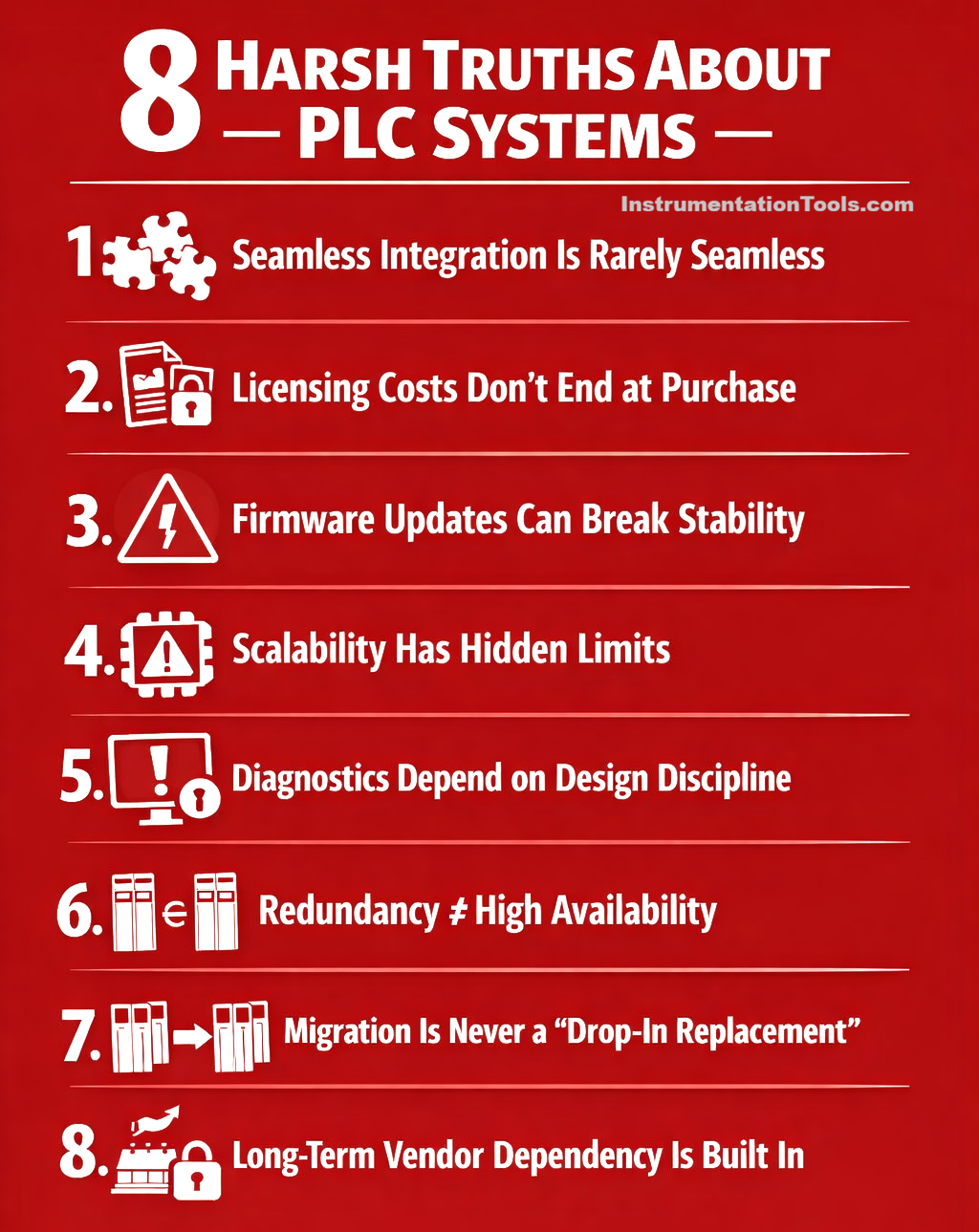
In brochures, a PLC system always looks powerful, seamless, and future-ready. Everything is modular, scalable, and Industry 4.0 compatible. But on real plant floors, especially in brownfield upgrades and tight commissioning schedules, the story is different.
PLC System Vendor Issues
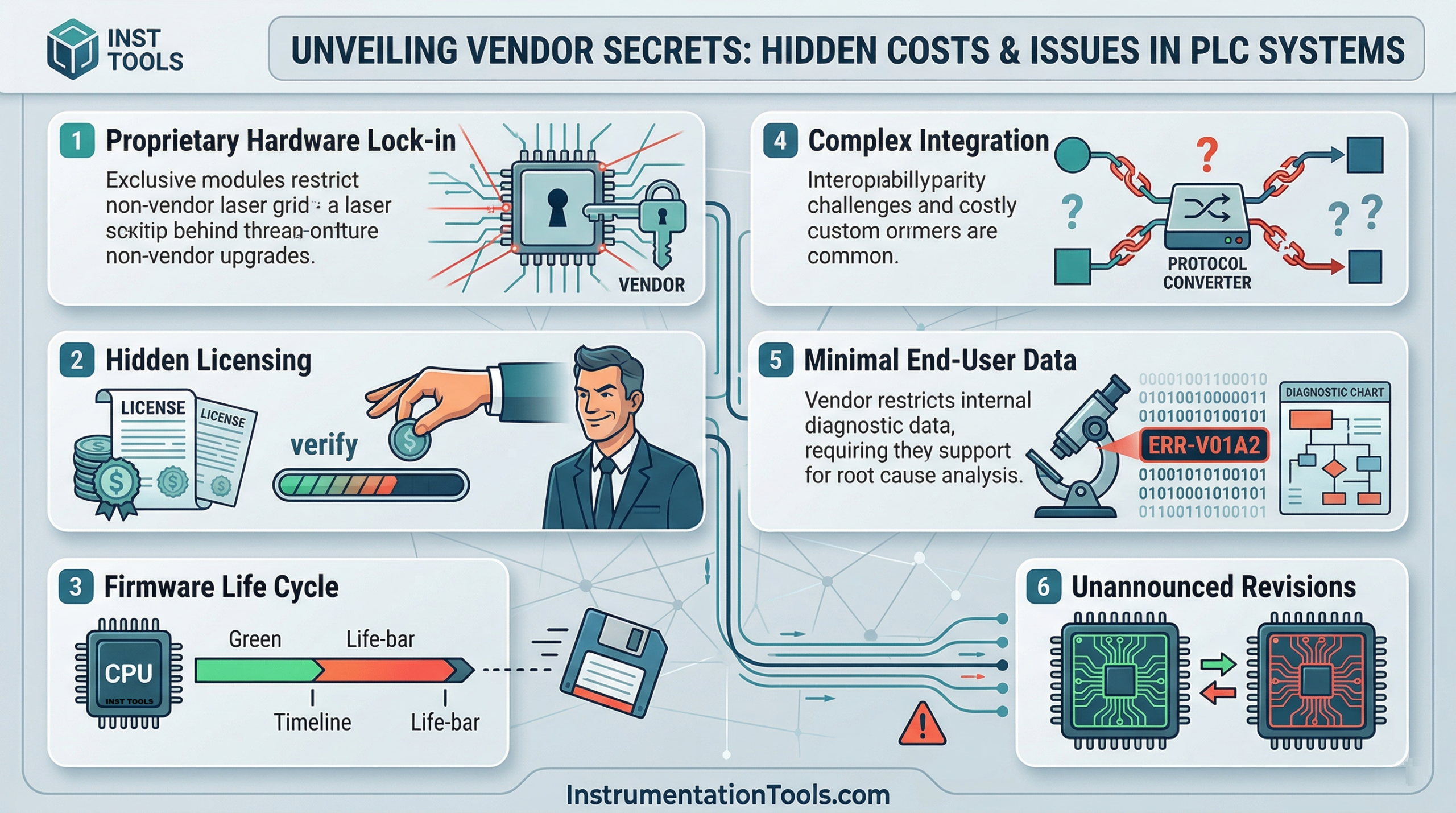
Vendors focus on features; engineers deal with consequences. Here are some truths rarely discussed during sales presentations.
Seamless integration
When vendors say a PLC offers “seamless integration,” they usually mean it supports common industrial protocols like Ethernet/IP, Profinet, or Modbus TCP. But in real plants, especially brownfield setups, integration goes beyond protocol support. Firmware mismatches, outdated EDS/GSD files, partial third-party implementations, and legacy device limitations often create unstable communication, intermittent I/O faults, or unexpected timeouts. A controller like ControlLogix may technically connect to older drives or remote I/O, but stability depends on proper version alignment and testing.
Even upgrades within the same brand, such as migrating from S7-300, can introduce differences in hardware configuration, memory handling, or communication structure. Network load, SCADA polling, and unmanaged switches further complicate performance. So integration is not just about speaking the same protocol; it requires careful engineering validation to ensure long-term reliability.
Licensing costs don’t end with purchase
When vendors quote a PLC system, the price usually reflects the hardware and a basic engineering software license. What often isn’t emphasized is that many advanced features are separately licensed. Functions like safety programming, motion control, redundancy, advanced diagnostics, OPC connectivity, and historian integration may require additional paid modules. For example, platforms engineered in TIA Portal or Studio 5000 often need upgraded license tiers to unlock full functionality.
The real surprise comes during expansion. Two years later, when you add new equipment, remote access, or additional operator stations, you may discover that runtime licenses, client access licenses, or version upgrades are required. Budgeting typically covers initial installation, not lifecycle growth. Over time, licensing can become a hidden cost in maintaining and scaling a PLC system.
Firmware updates can break stability
Firmware updates are often presented as performance improvements or security enhancements. While they do fix bugs and add features, they can also introduce subtle changes in instruction execution, communication timing, or module behavior. A system that has been running smoothly for years may start showing intermittent faults after an update, especially in complex networks with SCADA, drives, and third-party devices connected.
For example, updating CPU or module firmware in platforms programmed using it can sometimes affect compatibility with older I/O modules or communication cards. Rolling back firmware is not always simple, and in validated industries, even small changes may require re-testing and documentation. In live plants, stability often matters more than running the latest version.
Scalability has hidden limits
Vendors promote PLC systems as modular and easily expandable. While that’s technically true, every system has practical limits. CPU memory, program scan time, communication connections, and backplane bandwidth all have defined capacities. As you keep adding I/O, drives, HMIs, and SCADA tags, the controller load increases; sometimes gradually, sometimes suddenly.
For instance, a mid-range CPU in a system like ControlLogix or a compact Siemens controller engineered in TIA Portal may work perfectly during initial commissioning. But after multiple plant expansions, you may hit memory limits or communication connection ceilings. At that point, upgrading the CPU isn’t just hardware replacement; it can mean downtime, revalidation, and unexpected project costs.
Diagnostics depend on design discipline
Vendors often highlight advanced diagnostics as a built-in advantage of modern PLC systems. While hardware modules can detect faults like short circuits, wire breaks, or communication loss, the usefulness of diagnostics depends heavily on how the program is designed. If the programmer does not map device health bits, create meaningful alarm texts, and structure fault handling properly, operators will only see generic messages like “Module Fault” or “Communication Error.”
Whether the system is engineered in Studio 5000 or TIA Portal, the PLC will not automatically generate intelligent plant-level diagnostics. Clear alarm philosophy, proper tagging, and structured programming make the difference between a system that simply detects faults and one that helps maintenance troubleshoot quickly. The intelligence comes from an engineering discipline, not just the platform.
Redundancy is not equal to high availability
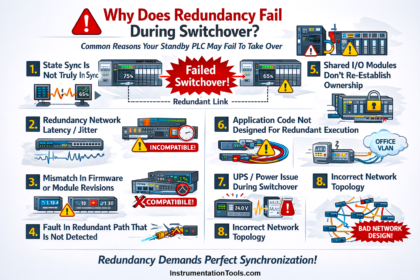
Vendors often promote redundant CPUs as a guarantee of high availability. While processor redundancy does reduce downtime during a CPU failure, it does not automatically make the entire system fault-tolerant. Many field devices like sensors, transmitters, and VFDs are still single points of failure. If a single I/O module, power supply, or unmanaged switch fails, the process can still trip.
For example, even in redundant architectures built on platforms like ControlLogix or high-availability Siemens systems configured through TIA Portal, true reliability depends on network design, power segregation, grounding philosophy, and field-level redundancy. Redundant CPUs improve controller reliability, but high availability requires system-level engineering.
Migration is never a drop-in replacement
Vendors often promote migration tools that automatically convert old PLC programs into new platforms. While tag databases and basic logic can be converted, real-world behavior rarely remains identical. Differences in scan cycle timing, analog scaling methods, retentive memory handling, and interrupt processing can subtly affect process performance.
For example, upgrading from legacy systems like PLC-5 or S7-300 to modern controllers may technically work after conversion, but tuning, testing, and validation are still required. Even small timing differences can impact batching accuracy, interlocks, or PID stability. Migration is not just software translation; it is full engineering verification.
Long-Term vendor dependency is built in
Once a plant standardizes on a PLC platform, switching later becomes difficult and expensive. Spare parts inventory, trained manpower, existing program structure, and licensed engineering software all tie the facility to that ecosystem. Over time, even small expansions tend to follow the same brand to maintain compatibility and reduce retraining effort.
For example, a plant heavily invested in systems engineered through Studio 5000 or TIA Portal will naturally continue with the same vendor for upgrades. While standardization improves consistency, it also creates vendor lock-in, something rarely discussed during initial procurement discussions.