

Foundation Fieldbus Standard Function Blocks
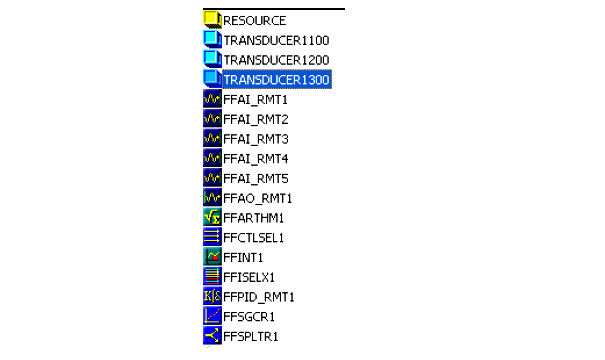
The FF standard specifies many different function blocks for the construction of control algorithms. Ten of them are considered “basic” FF function blocks: AI – Analog Input AO – Analog…

H1 FF Data Link layer
Like so many other industrial data networks, FOUNDATION Fieldbus is an “unswitched” or “broadcast” type of network. This means all data transmissions by all devices on a network are sensed…
H1 FF Physical layer
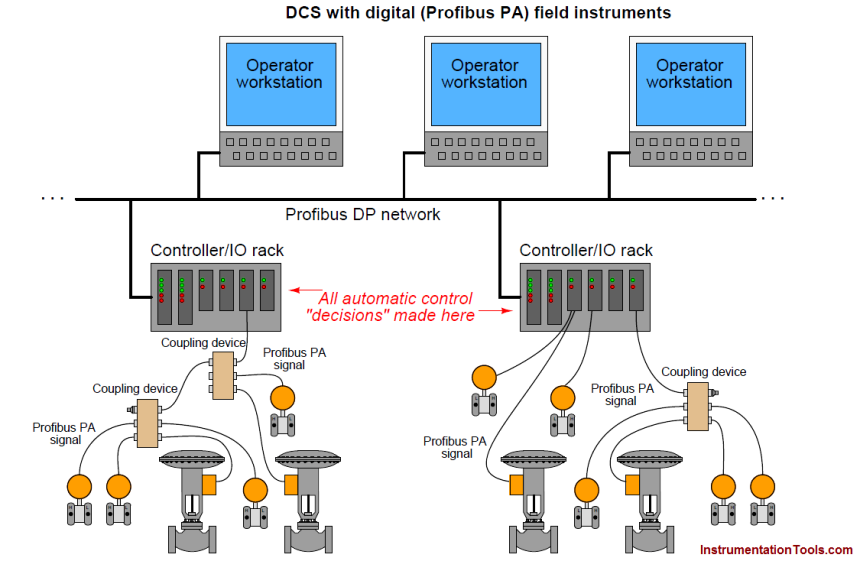
Layer 1 of the OSI Reference Model is where we define the “physical” elements of a digital data network. The H1 FF network exhibits the following properties: Two-wire (ungrounded) network…

Flow Standards
Continuous flow measurement are inferential, that is, we measure flow indirectly by measuring some other variable (such as pressure, time) directly.

Analytical Standards
An analyzer measures intrinsic properties of a substance sample such as its density, chemical content, or purity. Whereas the other types of instruments discussed in this chapter measure quantities incidental…

Foundation Fieldbus Logics
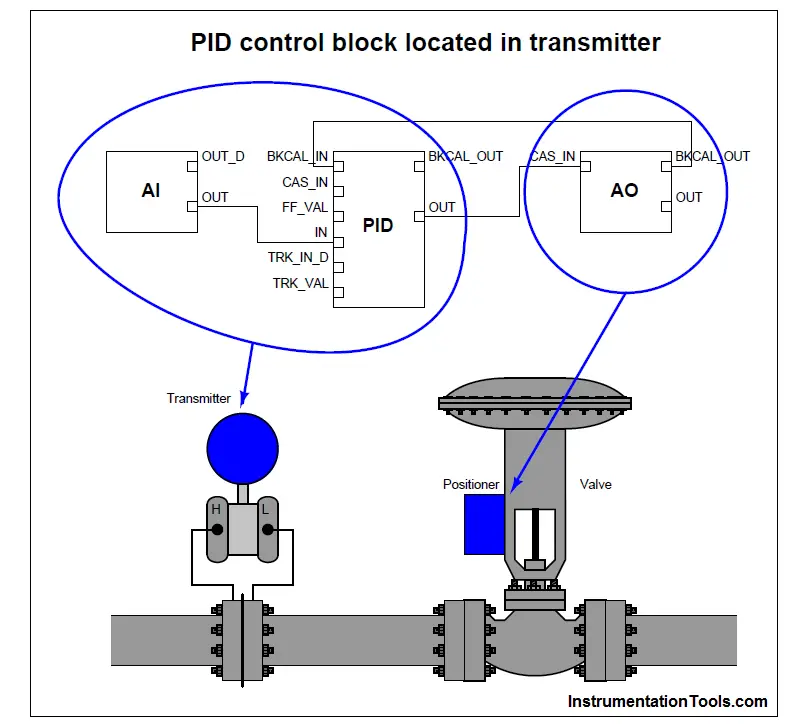
There is usually some freedom of choice in where various function blocks may be located in a FF segment. Take for example the following flow control loop, where a flow…

FF Function Blocks
Data-processing modules within FF systems are known as function blocks. Sometimes these blocks serve merely to catalogue data, while in other instances the blocks execute specific algorithms useful for process…

Fieldbus Device Capability
Not all FF devices are equally capable in terms of Data Link (layer 2) functions. The FF standard divides data link device functionality into three distinct groups, shown here in…

Foundation Fieldbus Communication Management
In a FF network segment, the Link Active Scheduler (LAS) device coordinates all communications between segment devices. Among the many responsibilities the LAS is tasked with are the following: Commands…
Foundation Fieldbus Device addressing
FOUNDATION Fieldbus devices (also called nodes) are addressed by an eight-bit binary number when functioning on an H1 segment. This binary number field naturally supports a maximum addressing range of…
