

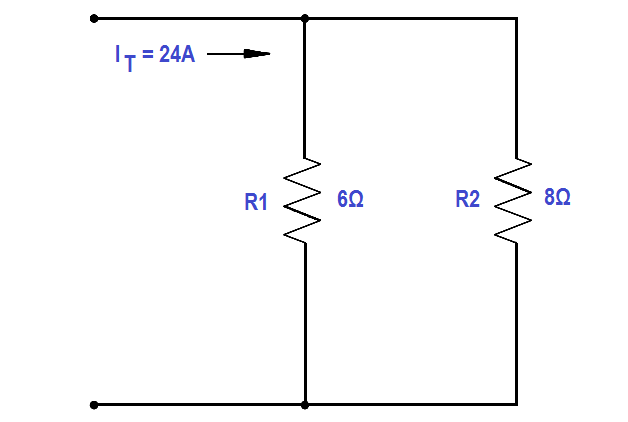
Current Division
Sometimes it is necessary to find the individual branch currents in a parallel circuit when only resistance and total current are known. When only two branches are involved, the current…
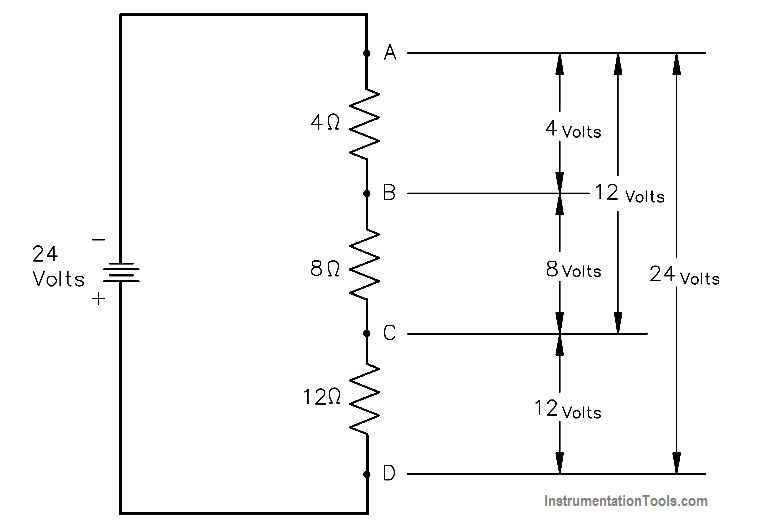
Voltage Divider
A voltage divider, or network, is used when it is necessary to obtain different values of voltage from a single energy source. A simple voltage divider is shown in Figure…
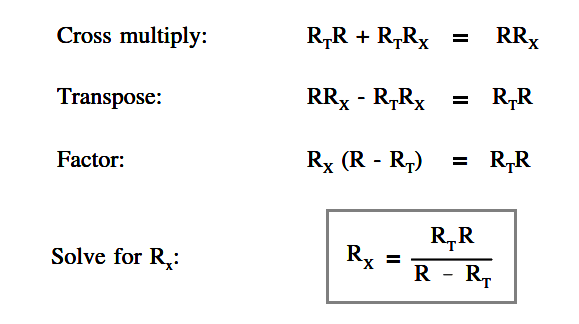
Simplified Formulas for Parallel Circuit Resistance Calculations
Total resistance of equal resistors in a parallel circuit is equal to the resistance of one resistor divided by the number of resistors. where RT = total resistance R =…
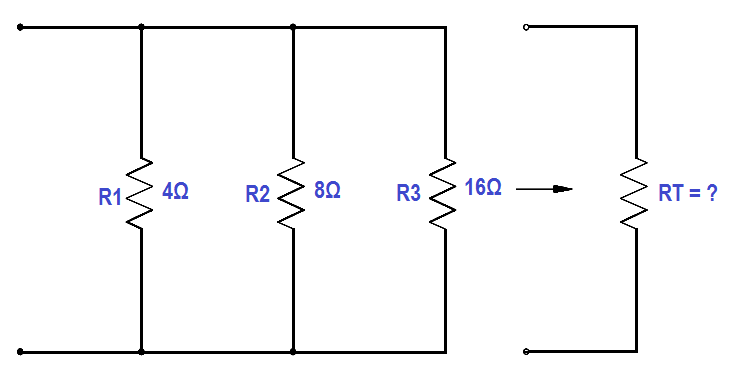
Resistance in Parallel Circuits
Total resistance in a parallel circuit can be found by applying Ohm’s Law. Divide the voltage across the parallel resistance by the total line current as shown in below equation.…
Parallel Circuit Current Calculations
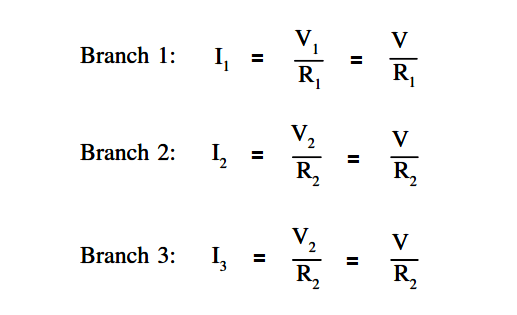
The sum of the currents flowing through each branch of a parallel circuit is equal to the total current flow in the circuit. Using Ohm’s Law, the branch current for…
Series Resistance
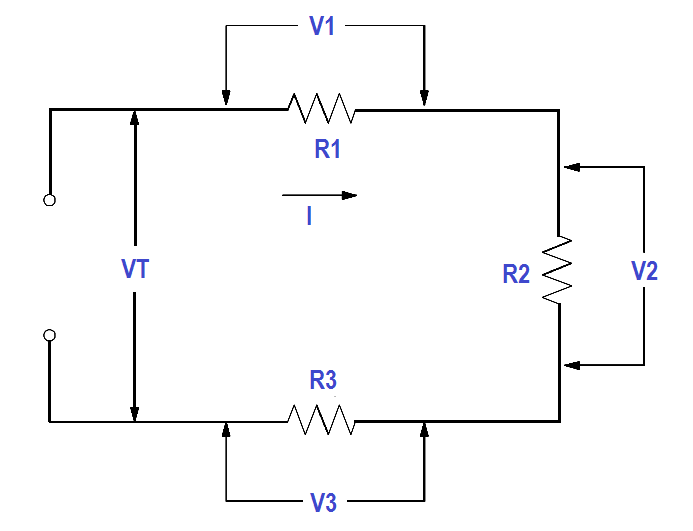
The total resistance in a series circuit is equal to the sum of all the parts of that circuit, as shown in below equation. RT =R1 +R2 +R3 ... …

Parallel Circuit
Parallel circuits are those circuits which have two or more components connected across the same voltage source (Figure 17). Resistors R 1 ,R2, and R3 are in parallel with each…
Series Circuit
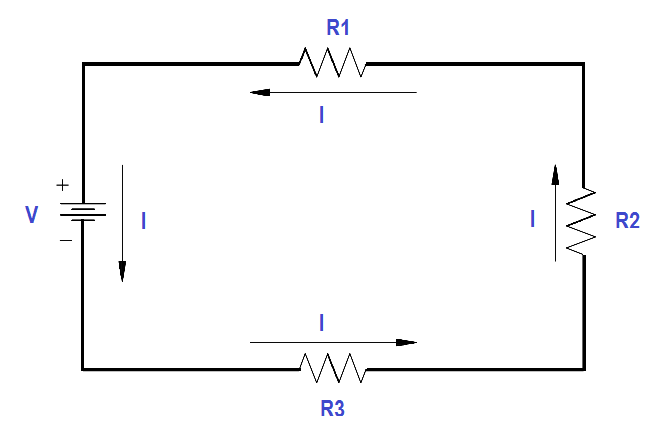
A series circuit is a circuit where there is only one path for current flow. In a series circuit (Figure 16), the current will be the same throughout the circuit.…
Electric Circuit : Open & Short Circuits
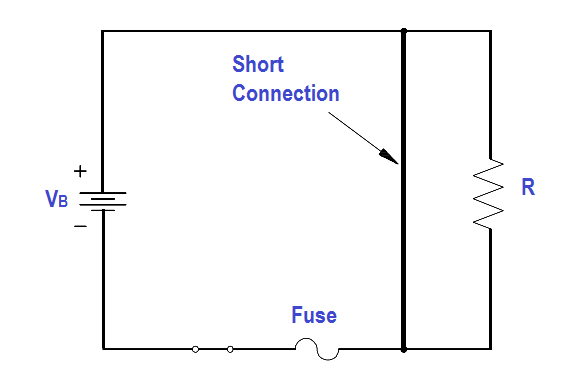
Each electrical circuit has at least four basic parts: a source of electromotive force, conductors, load or loads, and some means of control. In Figure 13, the source of EMF…
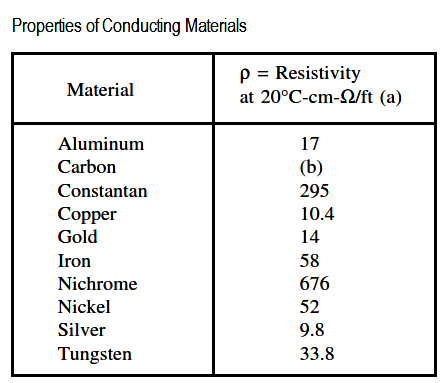
Resistivity
Resistivity is defined as the measure of the resistance a material imposes on current flow. The resistance of a given length of conductor depends upon the resistivity of that material,…
