

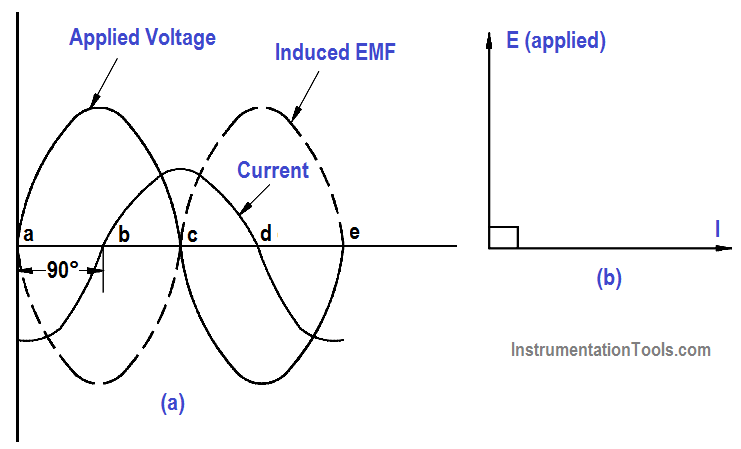
Voltage and Current Phase Relationships in an Inductive Circuit
As previously stated, any change in current in a coil (either a rise or a fall) causes a corresponding change of the magnetic flux around the coil. Because the current…
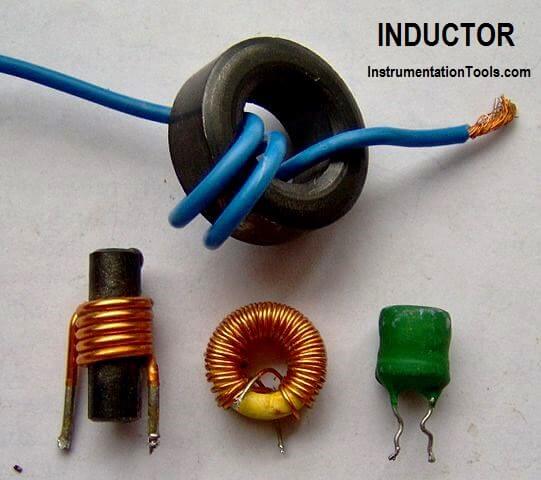
Inductance and Inductive Reactance
Inductance Any device relying on magnetism or magnetic fields to operate is a form of inductor. Motors, generators, transformers, and coils are inductors. The use of an inductor in a…

AC Generation Analysis : Effective Values, Phase Angle and Frequency
Analysis of the AC power generation process and of the alternating current we use in almost every aspect of our lives is necessary to better understand how AC power is…
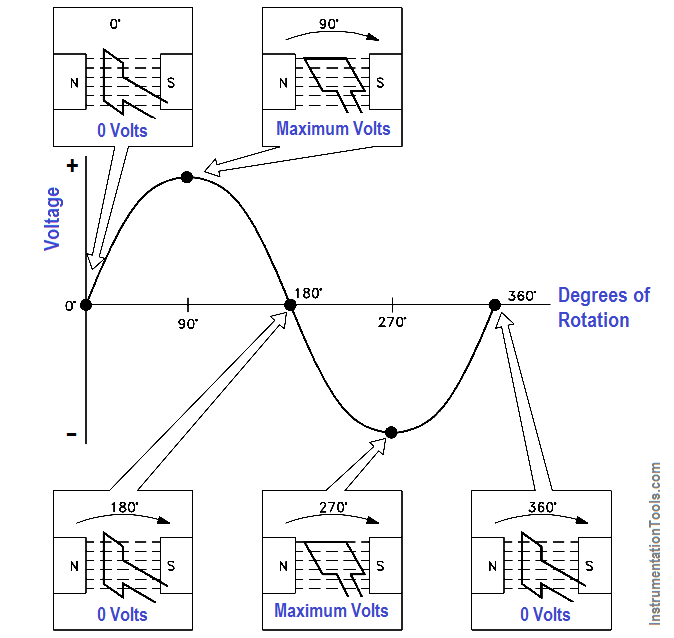
AC Generation
An understanding of how an AC generator develops an AC output will help the student analyze the AC power generation process. The elementary AC generator (Figure 1) consists of a…

Starting of DC Motors
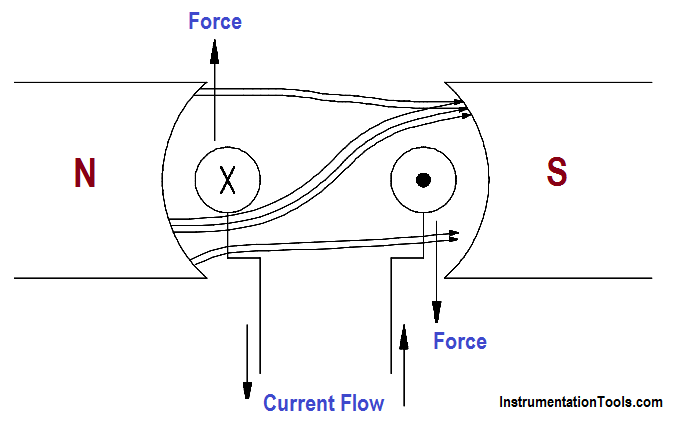
At the moment a DC motor is started the armature is stationary and there is no counter EMF being generated. The only component to limit starting current is the armature…
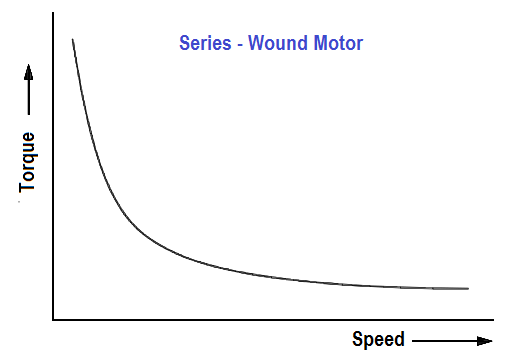
Series-Wound Motor
Since the armature and field in a series-wound motor are connected in series, the armature and field currents become identical, and the torque can be expressed as shown in below…
Shunt-Wound Motor Operation
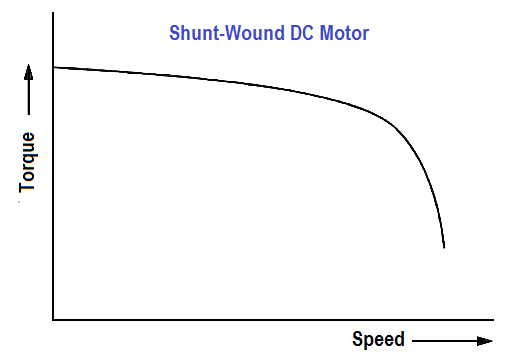
The speed-torque relationship for a typical shunt-wound motor is shown in Figure 8. A shunt-wound DC motor has a decreasing torque when speed increases. The decreasing torque-vs-speed is caused by…
DC Motor Connections
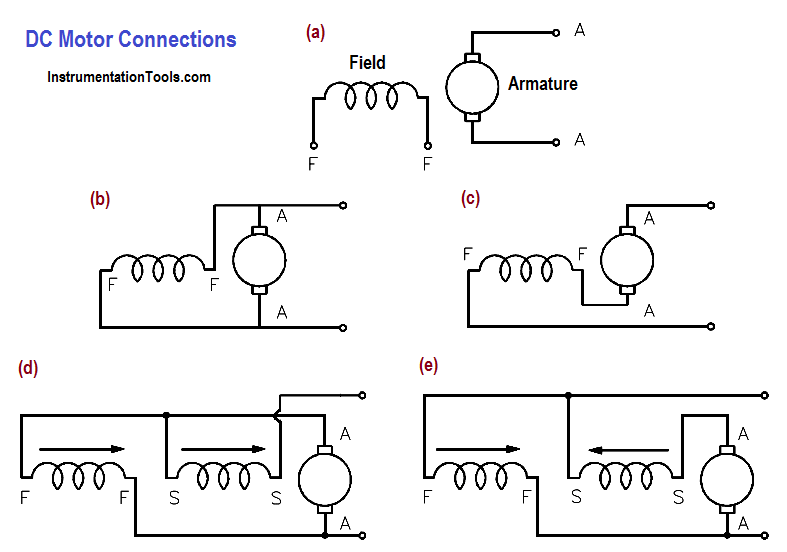
There are various types of DC motors found in industry today. Each type contains various characteristics that makes it desirable for certain applications. DC Motor Connections The below Figure shows…
DC Motor Speed
The field of a DC motor is varied using external devices, usually field resistors. For a constant applied voltage to the field (E), as the resistance of the field (Rf)…
Generator Action in a Motor
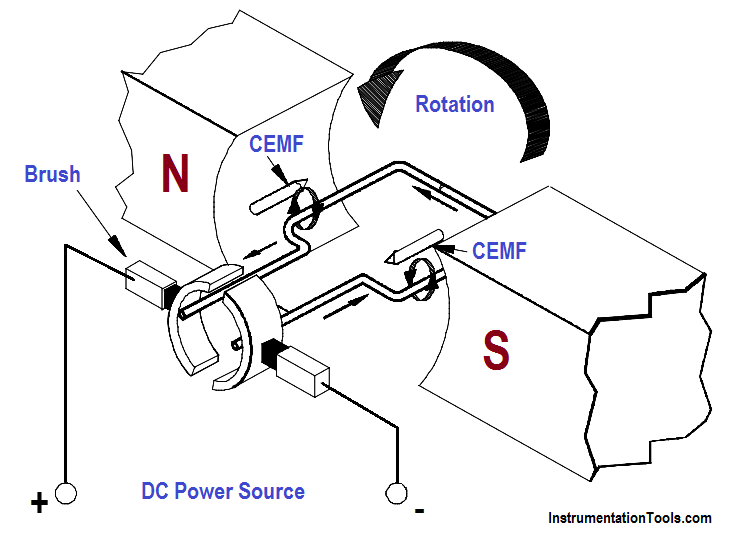
A generator action is developed in every motor. When a conductor cuts lines of force, an EMF is induced in that conductor. Current to start the armature turning will flow…
