Alarm flooding during power restoration is a common challenge in industrial automation systems, especially in platforms like SCADA and Distributed Control System (DCS). When power returns after an outage, all field instruments, controllers, and communication networks restart simultaneously, generating a sudden burst of alarms.
Alarm Flooding
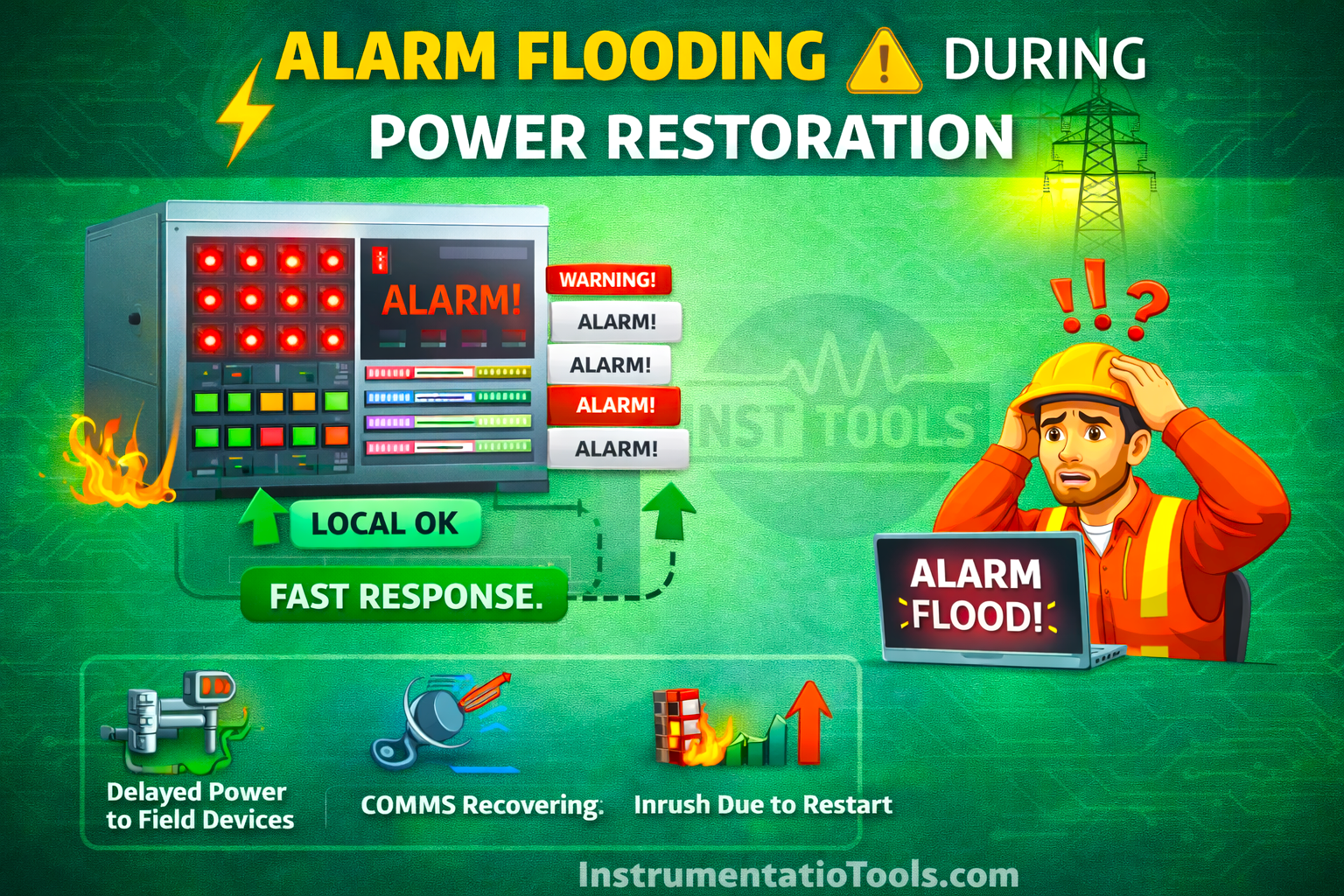
These alarms often include communication failures, process deviations, and device faults, all occurring within a very short time. This overload can overwhelm operators, making it difficult to distinguish critical alarms from normal startup conditions. Without proper alarm management strategies aligned with ISA standards, this situation can significantly impact safety, response time, and overall plant reliability.
Simultaneous restart of all field devices and process variables entering abnormal states
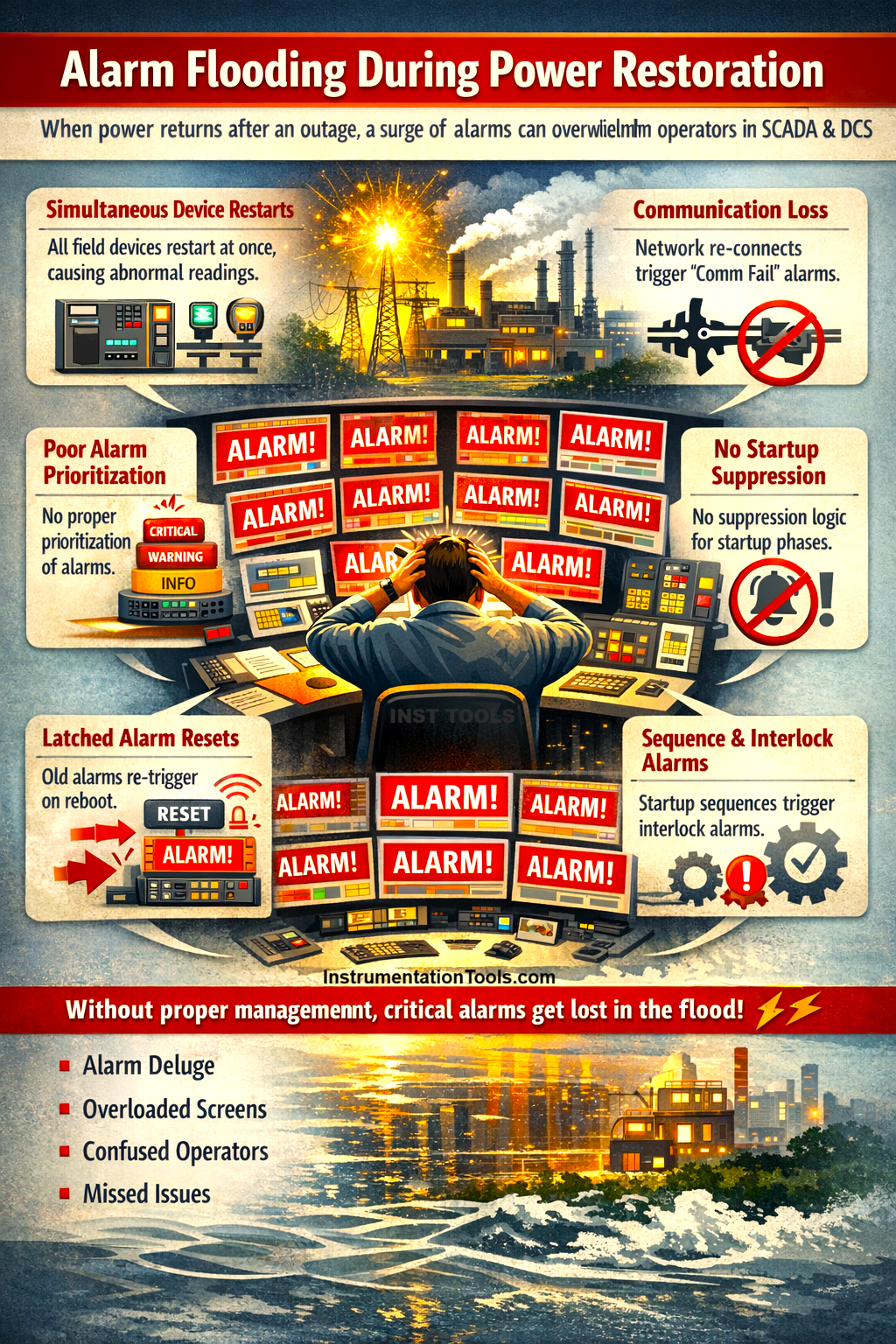
The first major cause of alarm flooding during power restoration is the simultaneous restart of all field devices and process variables entering abnormal states. When power is restored, transmitters, PLCs, drives, and remote I/O modules all boot up at the same time. During this brief period, most process values such as pressure, flow, level, and temperature do not reflect normal operating conditions; they may read zero, fluctuate randomly, or remain uninitialized.
In systems like SCADA and Distributed Control System (DCS), alarm limits are already configured for normal operation. So when these abnormal startup values are detected, the system treats them as genuine faults and triggers alarms immediately. For example, a flow transmitter showing zero during startup may generate a low flow alarm, even though the pump hasn’t started yet. Multiply this across hundreds of tags, and it results in a flood of alarms within seconds, overwhelming the operator before the process even stabilizes.
Communication loss and re-establishment across the network
The next key cause is communication loss and re-establishment across the network. During a power outage, communication between PLCs, remote I/O, and supervisory systems is completely lost. When power is restored, all devices attempt to reconnect simultaneously, but network stabilization takes time.
Protocols such as Modbus and EtherNet/IP may initially fail to establish proper handshaking, leading to temporary data timeouts or invalid signals. As a result, systems like SCADA interpret this as a device failure or a communication error and generate alarms for each disconnected node. Once communication is restored, these alarms may automatically clear, but the sudden appearance and disappearance of hundreds of such alarms creates confusion. This makes it difficult for operators to identify whether there is a real fault or just a transient startup condition.
Lack of proper alarm rationalization and prioritization
Another important factor is the lack of proper alarm rationalization and prioritization. In many systems, alarms are configured without following structured standards like ISA guidelines, leading to excessive and poorly classified alarms. During power restoration, this becomes a major issue because all alarms, whether critical, warning, or informational, are triggered together without distinction. Systems like SCADA and Distributed Control System (DCS) may treat every alarm with similar importance if priorities are not properly assigned.
For example, a minor deviation alarm may appear alongside a critical safety alarm, both demanding operator attention at the same time. This lack of hierarchy makes it difficult to focus on the most important issues first. As a result, operators may overlook critical alarms hidden within the flood, increasing the risk of delayed or incorrect responses.
Absence of startup-specific alarm handling or suppression logic
Another significant cause is the absence of startup-specific alarm handling or suppression logic. In many systems, alarms are configured to remain active at all times, regardless of whether the plant is in normal operation or in a startup condition. During power restoration, the process is not yet stable, but platforms like SCADA and Distributed Control System (DCS) continue to evaluate alarm conditions as if everything should already be running normally. This leads to a large number of unnecessary alarms being generated during the startup phase.
For instance, equipment that is intentionally stopped during startup may still generate trip or fault alarms simply because the system does not recognize the current state as a controlled startup. Without features like alarm suppression, delay timers, or startup modes, the system cannot differentiate between genuine faults and expected transient conditions, resulting in alarm flooding.
Simultaneous clearing and re-triggering of latched or standing alarms
Another contributing factor is the simultaneous clearing and re-triggering of latched or standing alarms. In many automation systems, alarms are designed to latch until they are acknowledged or reset by the operator. During a power failure, these alarm states may either reset or remain stored depending on system configuration. When power is restored, platforms like SCADA and Distributed Control System (DCS) may reinitialize alarm states, causing previously active alarms to reappear along with new ones generated during startup. At the same time, some alarms may briefly clear and then re-trigger as signals fluctuate.
This continuous cycle of alarms appearing, disappearing, and reappearing creates a cluttered alarm list. For operators, it becomes extremely difficult to track which alarms are new, which are persistent, and which are already acknowledged, further increasing confusion during an already critical recovery phase.
In this way, we saw alarm flooding during power restoration.