

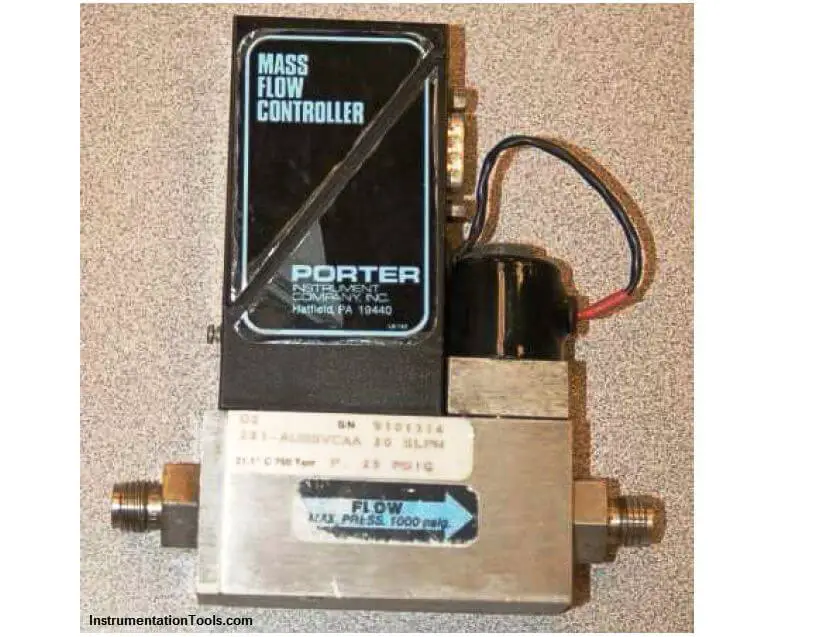
What is a Thermal Flow Meter?
Industrial thermal flow meter usually consists of flow tube with two temperature sensors inside, one that is heated and other is unheated.

Electronic Valve positioners
The purpose of a valve positioner is to ensure the mechanical valve’s position matches the command signal at all times. Thus, a valve positioner is actually a closed-loop control system…

Automated Calibration
Maintaining the calibration of instruments at a large industrial facility is a daunting task. Aside from the actual labor of checking and adjusting calibration, records must be kept not only…

Importance of Proper Control Valve Sizing
The flow coefficient of a control valve (Cv) is a numerical value expressing the number of gallons per minute flow of water the valve will pass with a constant pressure…
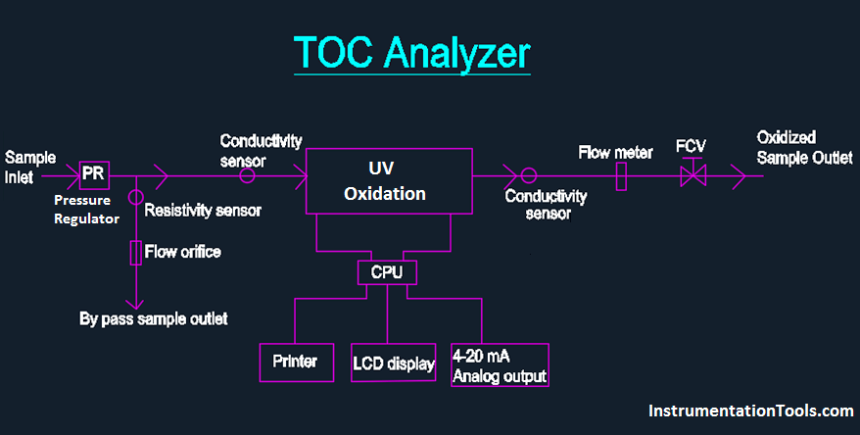
Total Organic Carbon Analyzer Principle
TOC analyzer Introduction of organic matter into water system occur only from living organisms and from decaying matter in source water, but also from purification and distribution system’s materials. In…
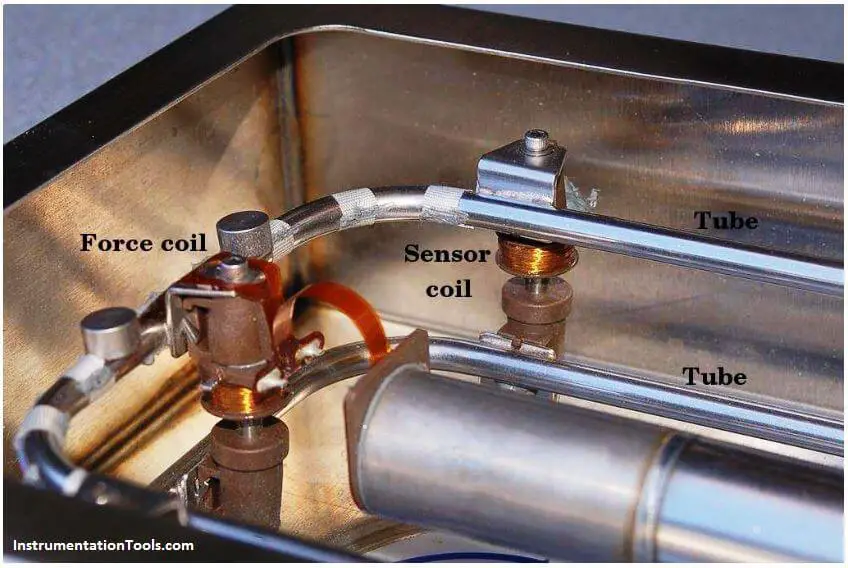
Coriolis Flow Meter Construction
Coriolis flow meter design uses a U shaped tube that redirects the fluid flow back to the center of rotation. See Coriolis Flow Meter Construction Images.

Basics of Control Valve Sizing
When control valves operate between fully open and fully shut, they serve much the same purpose in process systems as resistors do in electric circuits: to dissipate energy. Like resistors,…

Control Valve Split Range Example
As an example of a split-ranged system with opposite valve failure modes, consider the following temperature control system supplying either hot water or chilled water to a “jacket” surrounding a…

Control Valve Sequence Methods
In Control Valve Sequencing, for example, both control valves received the same pneumatic signal from a common I/P (current-to-pressure) converter. This means each valve received the exact same pressure signal…

Progressive Control Valve Sequence
Another form of control valve sequencing is used to expand the operating range of flow control for some fluid beyond that which a single control valve could muster. Once again…
