A PLC can continue controlling a process while its diagnostic history shows that something is becoming less reliable. Communication interruptions may become more frequent. An I/O module may begin reporting intermittent faults. At the SCADA level, operators may see recurring device dropouts long before the problem produces a sustained production stop.
Maintenance Management System
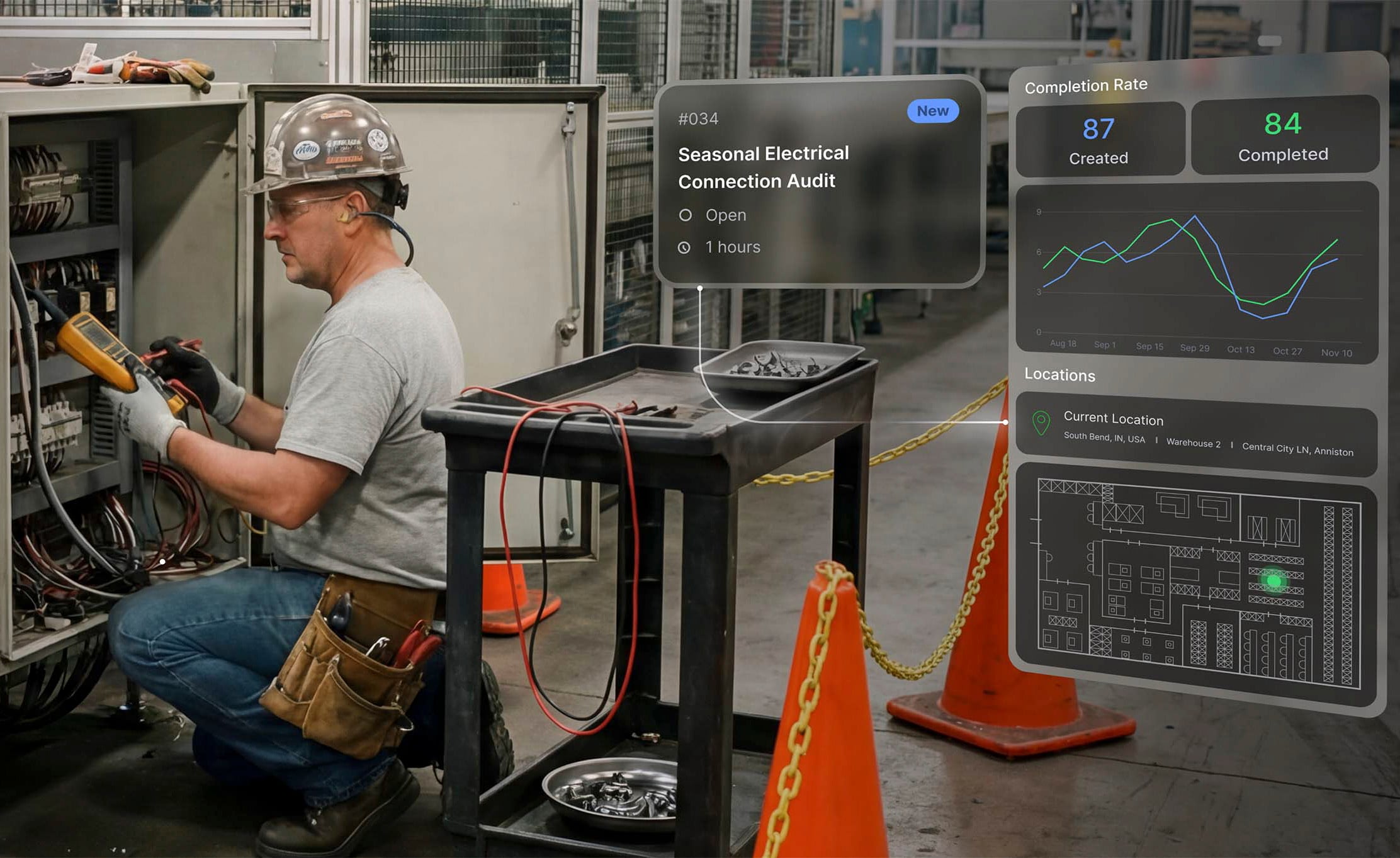
A maintenance management system gives those signals a useful destination. Instead of leaving them inside alarm logs or controller diagnostic buffers, the maintenance team can connect a qualified condition to the asset that needs inspection and record what technicians find. Asset management software adds the longer operational history that control-system data alone cannot provide. It links faults with previous repairs and recurring work, which gives maintenance teams a better basis for deciding when a developing condition deserves intervention.
PLC and SCADA Data Already Contains Early Warning Signals
Predictive maintenance does not always require a new sensor network. Modern control systems already produce diagnostic information that can reveal deterioration in the automation layer or in the equipment connected to it.
A controller may report repeated loss of communication with one remote I/O station. That event could disappear quickly enough to avoid stopping the process, yet its frequency may increase over several weeks.
Controller diagnostics can also expose hardware health directly. Some devices provide maintenance-required states or operating-life information. Others report internal faults or abnormal supply conditions. The exact data depends on the hardware, so predictive logic has to use signals that the device can actually support rather than assuming every PLC exposes the same health parameters.
SCADA adds another level of evidence. Historical data can show that an instrument has become unstable while the measured process remains relatively steady. Communication quality can be tracked over time as well. These patterns are often more useful than a single alarm because deterioration rarely begins with a perfectly timed threshold crossing.
The control infrastructure itself should also be treated as maintainable equipment. SCADA servers and industrial network hardware can develop their own reliability problems. A predictive maintenance program that monitors only pumps and motors while ignoring the systems used to control them leaves a significant blind spot.
An Alarm Is Not Automatically a Maintenance Trigger
SCADA systems are designed to draw operator attention to abnormal conditions. Maintenance systems have a different job. They need to decide which conditions justify physical work on an asset.
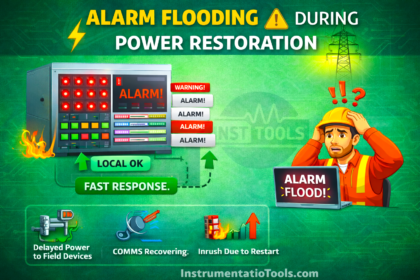
That distinction prevents a common integration mistake: generating a work order every time an alarm becomes active. A high-temperature process alarm may simply reflect normal operating behavior during a particular production phase. A brief communication interruption may recover without intervention. Sending every event to maintenance can bury genuine deterioration under hundreds of low-value tickets.
Useful predictive triggers usually need context. Repetition can be more informative than one event. Duration may reveal more than peak severity. A gradual change from the asset’s normal behavior can deserve attention even when the value remains below the alarm threshold.
This is also why alarm acknowledgment should remain separate from maintenance completion. An operator can acknowledge an event because it has been seen. That does not prove the underlying equipment condition has been corrected. The maintenance record should close only after the relevant work has been performed and documented.
The Maintenance System Turns Condition Data Into Work
PLC and SCADA platforms are excellent at monitoring operating conditions. They were not designed to manage technician assignments or preserve complete repair histories.
Once a condition has been qualified as maintenance-relevant, the maintenance platform can create the work around it. The technician can see which asset generated the condition and what happened during earlier repairs. The work record can remain tied to that asset after the current fault has disappeared from the SCADA screen.
This separation also keeps control and maintenance responsibilities clean. The PLC continues executing control logic. SCADA continues presenting process information to operators. The maintenance platform handles the actions that occur after a condition has been identified. Mature systems usually qualify the event before it creates work rather than treating automation itself as the goal.
The work order can also preserve information that the control system never knew. A technician may discover that the apparent module fault came from a loose terminal rather than failed electronics. Recording that finding changes how the next occurrence should be interpreted.
Repair History Makes Predictive Logic More Accurate
Historian data can show what happened before a fault. Maintenance history explains what happened after somebody investigated it.
That difference is valuable when teams refine predictive rules. Suppose a communication error repeatedly generates maintenance activity, but technicians consistently find no hardware defect. The original trigger may be too sensitive. If the same event repeatedly ends with replacement of one connector type, the maintenance history points in the opposite direction. The signal may deserve earlier attention.
Completed work also helps separate symptoms from causes. A PLC may record an I/O fault because the field device lost power. Replacing the I/O module would address the wrong asset. The technician’s closeout record can preserve the real cause so future analysis does not learn from an incorrect assumption.
Over time, this creates a feedback loop between operational data and maintenance experience. SCADA and historian records show how the condition developed. Work orders show which intervention corrected it. The predictive strategy becomes stronger because it is based on both machine behavior and verified maintenance outcomes.
Integration Should Protect the Control System
A predictive maintenance connection should not turn the CMMS into another control-system client with unnecessary privileges.
One practical architecture is to move diagnostic or condition information from the automation environment through an established data layer. The source may be SCADA or a historian. OPC UA can provide standardized health and maintenance information where supported. An integration service can then pass qualified events to the maintenance platform through its API.
This arrangement keeps maintenance traffic away from time-critical PLC logic. Predictive calculations also do not need to run inside the controller simply because the original data originates there. The PLC should continue doing deterministic control work while higher-level systems handle longer-term analysis.
Cybersecurity deserves the same separation. A maintenance application rarely needs permission to write directly into PLC memory. Read-only or tightly scoped interfaces reduce exposure and make the data path easier to audit. Any automated connection should also follow the plant’s normal change-control process before it reaches production.
Time synchronization is easy to overlook. A SCADA event stamped several minutes differently from the maintenance platform can make fault reconstruction unnecessarily difficult. Consistent timestamps become especially valuable when technicians compare a work order with controller diagnostics and historian trends.